
Understanding Lower Back Pain – And How Physiotherapists Can Help

Lower back pain is one of the most prevalent health complaints worldwide. It is estimated that up to 80% of people will experience lower back pain at some point in their lives, making it the leading cause of disability globally (Hartvigsen et al., 2018).
While lower back pain can be distressing, the majority of cases are not associated with serious pathology and tend to improve with appropriate management, education, and movement (Maher et al., 2017).

What Is Lower Back Pain?
Lower back pain refers to pain or discomfort in the lumbar spine and surrounding structures. Symptoms may range from stiffness to sharp pain and can be classified as:
Acute (less than 6 weeks)
Subacute (6–12 weeks)
Chronic or persistent (more than 12 weeks)
Importantly, research shows that around 90% of lower back pain cases are “non-specific”, meaning no single tissue can be identified as the source of pain (Maher et al., 2017). This does not mean the pain is imagined — rather, it reflects the complex interaction between tissues, movement, nervous system sensitivity, and psychosocial factors.
Why Rest Is No Longer Recommended
Older approaches to lower back pain often focused on rest and activity avoidance. However, strong evidence now shows that prolonged rest can worsen outcomes, leading to increased stiffness, reduced strength, and fear of movement (Qaseem et al., 2017).
Clinical guidelines consistently recommend:
Staying active where possible
Gradual return to normal activities
Avoiding bed rest except for very short periods
These recommendations are supported by international guidelines, including those from National Institute for Health and Care Excellence (NICE, 2020).
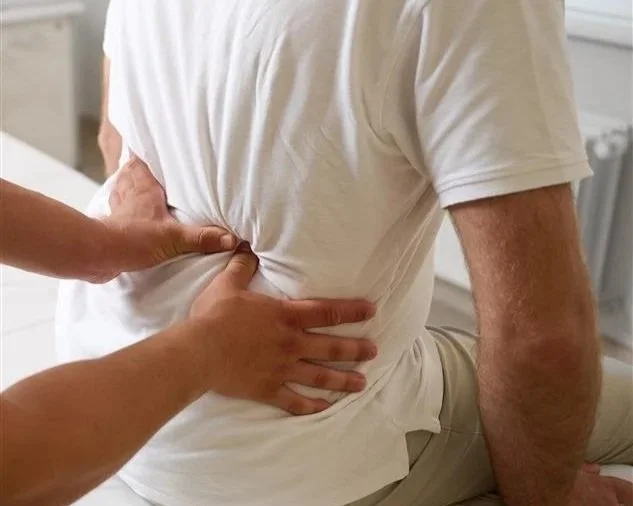
How Physiotherapists Help with Lower Back Pain
Physiotherapy management is guided by best-practice clinical guidelines and tailored to the individual rather than based on imaging findings alone (Australian Commission on Safety and Quality in Health Care [ACSQHC], 2022).
1. Comprehensive Assessment
Physiotherapists assess:
Movement patterns and spinal mobility
Muscle strength and endurance
Functional activities such as sitting, lifting, or sport
Psychosocial factors including fear of movement
This whole-person approach is supported by evidence showing that addressing biological, psychological, and social factors improves outcomes in lower back pain (Hartvigsen et al., 2018).
2. Education and Pain Understanding
Education is one of the most effective interventions for lower back pain.
Physiotherapists provide reassurance that:
The spine is strong and adaptable
Pain does not equal damage
Imaging findings such as disc bulges are common even in pain-free people
Studies show that improving understanding of pain reduces fear and disability and leads to better long-term outcomes (Maher et al., 2017; NICE, 2020).
3. Exercise Therapy
Exercise therapy is strongly recommended across acute, subacute, and persistent lower back pain (Qaseem et al., 2017).
Physiotherapy-led exercise may include:
Mobility exercises
Strength training for trunk and hips
Functional retraining for work or sport
Gradual exposure to movements that have become painful or avoided
There is no single “best” exercise — success depends on individualisation and progression (ACSQHC, 2022).
4. Manual Therapy
Manual therapy techniques such as mobilisation or soft-tissue therapy may be used to provide short-term symptom relief, particularly when pain is limiting movement (NICE, 2020). Evidence shows manual therapy is most effective when combined with exercise and education, rather than used in isolation (Qaseem et al., 2017).
5. Long-Term Self-Management and Prevention
Lower back pain has a recurrent nature, with many people experiencing flare-ups over time. Physiotherapists help patients develop:
Flare-up management plans
Load and activity pacing strategies
Confidence to stay active during future episodes
This aligns with modern pain science approaches that prioritise self-management and resilience (Hartvigsen et al., 2018).
When to Seek Physiotherapy
Early physiotherapy intervention is associated with reduced pain, improved function, and decreased reliance on imaging and medication (Qaseem et al., 2017).
Urgent medical assessment is recommended if lower back pain is accompanied by symptoms such as significant and progressive neurological changes, trauma, or bowel or bladder dysfunction — though these cases are uncommon (NICE, 2020).
Conclusion
Lower back pain is common, complex, and sometimes persistent — but it is also highly manageable. Physiotherapy plays a central role in recovery by combining education, movement, and individualised care, helping people return to meaningful activities with confidence.
References
Australian Commission on Safety and Quality in Health Care. (2022). Low back pain clinical care standard. https://www.safetyandquality.gov.au/standards/clinical-care-standards/low-back-pain-clinical-care-standard
Hartvigsen, J., Hancock, M. J., Kongsted, A., Louw, Q., Ferreira, M. L., Genevay, S., Hoy, D., Karppinen, J., Pransky, G., Sieper, J., Smeets, R. J., & Underwood, M. (2018). What low back pain is and why we need to pay attention. The Lancet, 391(10137), 2356–2367. https://doi.org/10.1016/S0140-6736(18)30480-X
Maher, C., Underwood, M., & Buchbinder, R. (2017). Non-specific low back pain. The Lancet, 389(10070), 736–747. https://doi.org/10.1016/S0140-6736(16)30970-9
National Institute for Health and Care Excellence. (2020). Low back pain and sciatica in over 16s: Assessment and management (NICE guideline NG59). https://www.nice.org.uk/guidance/ng59
Qaseem, A., Wilt, T. J., McLean, R. M., & Forciea, M. A. (2017). Noninvasive treatments for acute, subacute, and chronic low back pain: A clinical practice guideline from the American College of Physicians. Annals of Internal Medicine, 166(7), 514–530. https://doi.org/10.7326/M16-2367